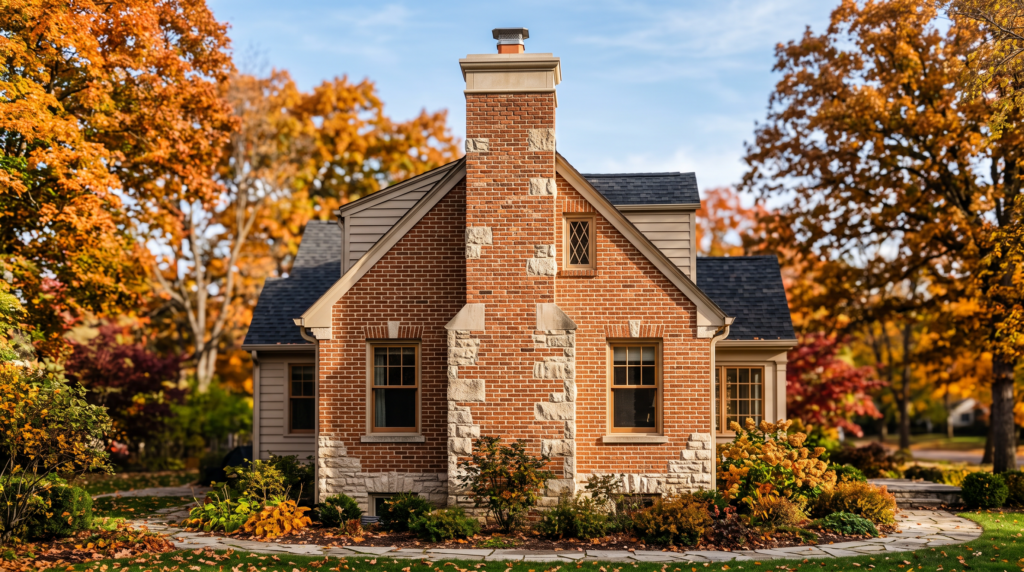
Winter in Southeastern Wisconsin brings intense weather shifts that test the exterior brickwork and chimney structures of every residential home. If you want to keep your indoor hearth safe, efficient, and warm all winter long, inspecting and repairing your brookfield fireplace and chimney masonry before the first hard frost is essential. Addressing hairline cracks, crumbling mortar joints, and saturated clay bricks in early autumn stops moisture from expanding inside the wall structure and saves thousands in structural rebuilding costs.
- What causes masonry deterioration in Wisconsin winters? Water enters porous brick and mortar joints, expanding by roughly 9% when temperatures drop below 32°F, which creates spalling and structural cracks.
- When is the best time for chimney tuckpointing? Early autumn is ideal because mortar needs moderate temperatures between 40°F and 90°F to cure properly before freezing cycles begin.
- How does regular maintenance prevent house fires? Solid mortar joints and intact flue linings contain extreme combustion temperatures and prevent sparks or carbon monoxide from escaping into structural framing.
Key Takeaways for Homeowners
- Freeze-thaw cycles cause rapid structural decay: Trapped moisture inside porous masonry expands repeatedly, popping brick faces (spalling) and breaking mortar bonds.
- Early fall repairs save money: Performing chimney crown sealing, tuckpointing, and waterproofing in September or October ensures bonding materials cure in optimal temperatures.
- Complete chimney health protects your family: A well-maintained fireplace and chimney system prevents hazardous chimney fires, structural smoke leaks, and costly structural collapse.
Understanding the Wisconsin Freeze-Thaw Cycle and Masonry Stress
Wisconsin homeowners experience dozens of rapid freeze-thaw cycles between late autumn and early spring. When rainfall or melting snow seeps into porous clay bricks, concrete crowns, or deteriorating mortar joints, that trapped water freezes as nighttime temperatures drop. Because water expands by approximately nine percent upon freezing, it generates immense hydraulic pressure inside the microscopic pores of the masonry material.
Over several weeks, this continuous expansion and contraction causes irreversible structural issues:
- Brick Spalling: The outer face of the brick pops off or flakes away, exposing the softer inner clay to accelerated weather damage.
- Mortar Deterioration: Mortar joints soften, crack, and turn to loose sand, compromising the vertical stability of the entire chimney column.
- Efflorescence Buildup: White, powdery salt deposits appear on the exterior brick surface as evaporating moisture pulls mineral salts out of the masonry.
- Interior Flue Damage: Water penetration breaks down clay flue tiles and causes liner cracking, creating dangerous avenues for heat and exhaust gases to reach adjacent wood framing.
According to local masonry repair standards documented by Sheboygan Chimney Experts, using specialized mortar mixes engineered specifically for freeze-thaw resilience is necessary to ensure repairs withstand multiple Midwestern winters without premature failure.
Essential Components of a Safe Fireplace and Chimney System
Maintaining a dependable masonry for chimney structure requires understanding how each component works together to shield your home from water intrusion and fire hazards.
| Component | Primary Function | Common Failure Symptoms | Recommended Repair |
|---|---|---|---|
| Chimney Crown | Concrete slab at top of stack that sheds rainwater away from brick walls | Hairline fissures, missing chunks, flat slope holding standing water | Elastomeric crown sealing or complete reinforced concrete crown rebuild |
| Mortar Joints | Binds individual bricks and stones into a unified, weather-resistant wall | Recessed joints, powdery sand, gaps deeper than 1/4 inch | Precision tuckpointing with Type N or lime-based mortar match |
| Roof Flashing | Sheet metal barrier sealing the intersection between chimney and roof deck | Rusted tin, pulled counter-flashing, cracked caulk, ceiling water stains | Reglet-cut step and counter-flashing installation in copper or aluminum |
| Chimney Cap & Spark Arrestor | Prevents direct rain, snow, birds, and debris from entering the open flue | Missing cap, clogged mesh screen, rust holes, animal nesting | Stainless steel or heavy-gauge copper cap replacement with spark arrestor |
The Rise of Preventative Masonry Restoration
Historically, property owners only contacted a masonry contractor after catastrophic failure occurred, such as water leaking through living room ceilings or bricks tumbling onto the roof. In recent years, structural engineers and insurance adjusters have highlighted how proactive maintenance saves tens of thousands of dollars compared to emergency tear-downs.
Preventative restoration focuses on catching decay early through thermal imaging, sounding tests on suspect bricks, and non-destructive joint testing. Industry professionals at Chimney Concepts emphasize that annual evaluations conducted in early autumn safeguard both structural integrity and indoor air quality by finding hidden flue separations before wood-burning season begins.
Professional Tuckpointing and Mortar Restoration in Practice
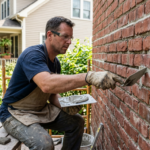
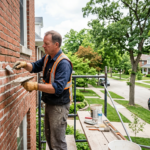
Tuckpointing is the specialized craft of removing degraded mortar from between brick or stone units and replacing it with fresh, color-matched mortar. When executed by master masons, tuckpointing restores structural strength and prevents water penetration for two to three decades.
Step 1: Joint Preparation and Depth Grinding
Masons use diamond-tipped tuckpointing grinders and specialized hand chisels to cut out damaged mortar to a uniform depth of one-half to three-quarters of an inch. Cutting clean, square shoulders along the brick edges ensures the new mortar achieves maximum mechanical adhesion.
Step 2: Mortar Formulation and Compressive Matching
Using improper mortar is the most common mistake made by inexperienced contractors. Older historic homes built in Brookfield and Milwaukee County feature softer clay bricks that require flexible, low-compressive-strength mortar (such as Type N or Type O). Applying modern high-strength Type S or Portland-heavy mortar causes old bricks to crack under thermal expansion because the mortar is harder than the brick itself.
Step 3: Layering and Tooling
Fresh mortar is packed tightly into the joints in multiple thin lifts (layers) to prevent shrinkage voids. Once the mortar reaches thumbprint hardness, the mason tools the joint with a convex jointer or concave striking iron to compress the outer surface and create a water-shedding profile.
Step 4: Siloxane-Based Breathable Waterproofing
After the tuckpointed joints cure completely, applying a 100% breathable, siloxane-based penetrating water repellent creates an invisible hydrophobic barrier. Unlike silicone paints or thick sealers that trap interior vapor and cause freeze-thaw spalling, penetrating repellents allow water vapor inside the home to escape outward while repelling exterior liquid rain and snow.
Seasonal moisture management guidelines from Apex Xteriors confirm that pairing sound flashing with hydrophobic brick protection creates an impenetrable barrier against wind-driven precipitation.
Tailored Solutions for Different Home Architectures
Every home in Southeastern Wisconsin has unique architectural characteristics that require custom masonry solutions depending on building age, material composition, and heating usage.
- Historic Cream City Brick Residences: Porous local cream brick requires specialized lime-rich mortar blends, gentle chemical cleaning without high-pressure washing, and specialized breathable moisture barriers.
- Modern Stone and Cultured Veneer Fireplaces: Manufactured stone and fieldstone veneers need meticulous flashing integration along weep screeds to prevent water accumulation behind exterior backing boards.
- High-Efficiency Wood-Burning Stoves & Inserts: Stoves that burn hotter require insulated stainless steel liners to prevent thermal shock to surrounding exterior chimney brickwork.
- Contemporary Gas Fireplace Conversions: Direct-vent and B-vent conversions require custom top-plate caps and custom masonry surround modifications to maintain balanced ventilation.
Why Choose Precision Masonry Pro for Your Fireplace and Chimney Needs
Precision Masonry Pro has served Brookfield, Waukesha County, and surrounding communities with exceptional craftsmanship, structural honesty, and lasting masonry repairs. When you work with our team, you gain access to experienced masons who understand the distinct challenges of Wisconsin winters.
Our commitment to excellence includes:
- Comprehensive Multi-Point Inspections: We thoroughly examine chimney crowns, flashing lines, firebox refractory bricks, dampers, and exterior mortar joints.
- Authentic Material Matching: We match historic brick sizes, textures, and custom mortar pigments to preserve the original architectural beauty of your home.
- Engineered Weather Protection: Every repair uses industrial-grade materials designed specifically to endure severe freeze-thaw cycles.
- Clear, Honest Communication: You receive detailed written assessments outlining essential repairs without high-pressure upselling.
Frequently Asked Questions
How can I tell if my chimney needs tuckpointing?
Inspect your chimney from ground level with binoculars or up close if safe. If you see crumbling mortar sand falling onto your roof, visible gaps between bricks deeper than 1/4 inch, or hairline cracks running along the mortar lines, your chimney requires professional tuckpointing before water causes brick spalling.
Can chimney tuckpointing and masonry work be done in winter?
While minor emergency repairs can be performed using thermal tents and heated mortar mixes, standard masonry work is best completed in autumn when ambient temperatures remain consistently above 40°F. Scheduling repairs before freezing weather arrives ensures maximum mortar bonding strength and durability.
What is the difference between a chimney sweep and a masonry inspection?
A chimney sweep focuses on cleaning creosote and debris from inside the flue pipe and firebox. A masonry inspection evaluates the physical and structural condition of the brickwork, mortar joints, chimney crown, roof flashing, and foundation support to identify water intrusion and structural risks.
How long does quality tuckpointing last on a brick chimney?
When completed by experienced professionals using the correct mortar type and breathable water repellents, high-quality tuckpointing lasts between 20 and 30 years, even under tough Wisconsin weather conditions.
Protect Your Home’s Masonry Before Winter Arrives
Preparing your brookfield fireplace and chimney masonry for the upcoming winter is the most cost-effective way to protect your property value, ensure heating efficiency, and keep your household safe. Whether your chimney needs targeted tuckpointing, a new concrete crown, or a complete structural rebuild, Precision Masonry Pro delivers master-level craftsmanship tailored to Wisconsin climate demands. Contact our team in Brookfield, WI today to schedule your comprehensive chimney masonry evaluation before the cold weather sets in.