Understanding Fireplace Masonry Before the Wisconsin Freeze
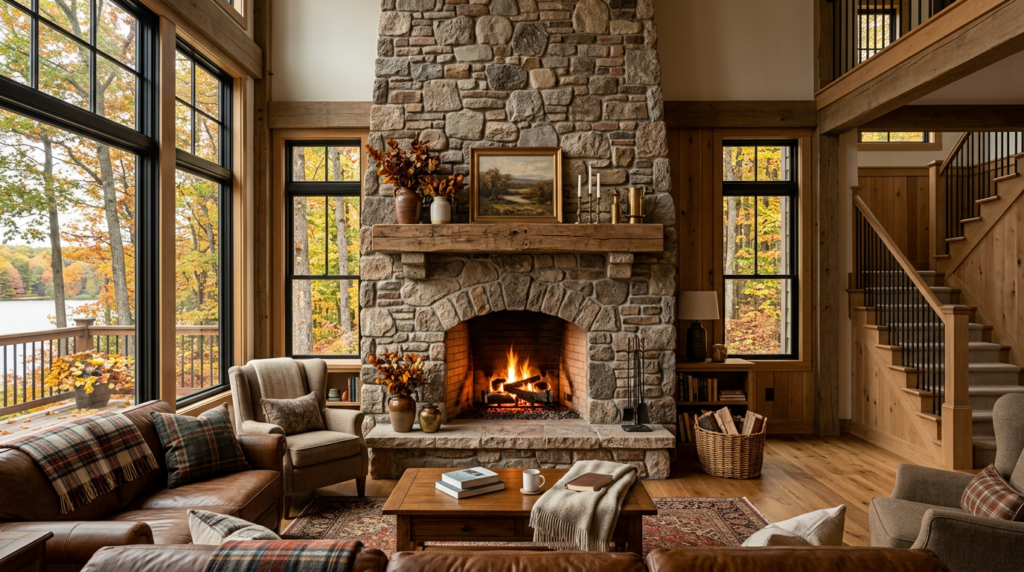
A roaring fireplace provides comfort and reliable warmth when Midwest temperatures drop. For homeowners searching for reliable care for their brookfield fireplace, seasonal preparation is vital to protect against harsh Wisconsin winters. As autumn settles across Southeast Wisconsin, addressing hairline cracks, crumbling mortar, and chimney crowns ensures your hearth operates safely all winter long.
Executive Summary: Wisconsin freeze-thaw cycles create extreme moisture stress on residential brickwork and chimney structures. Proactive autumn tuckpointing, crown repair, and professional fireplace inspection prevent costly structural failures. Routine care safeguards indoor air quality, improves heating efficiency, and extends the lifespan of your custom masonry.
Key Questions Answered for Local Homeowners
- How does freeze-thaw cycling damage masonry? Water penetrates porous brick and mortar joints, expanding by roughly nine percent as it freezes and breaking masonry bonds from within.
- When is the best time for chimney tuckpointing? Early to mid-autumn provides optimal ambient curing temperatures (between 40°F and 85°F) before winter frosts arrive.
- Why is specialized refractory mortar required inside the firebox? Standard Portland-based mortar degrades and cracks under extreme firebox heat, whereas refractory mortar withstands temperatures exceeding 2,000°F.
Key Takeaways for Autumn Hearth Preparation
- Moisture intrusion represents the single greatest threat to Wisconsin chimney masonry, accelerating spalling and mortar decay during rapid temperature swings.
- Annual inspections identify hidden flue tile cracks, deteriorating damper seals, and roofline flashing gaps before winter fires begin.
- Professional masonry repair and precision tuckpointing restore structural integrity while preserving the architectural heritage of your home.
The Rise of Custom Masonry Fireplaces in Wisconsin Architecture
Wisconsin residential architecture has long celebrated stone and brick hearths as foundational gathering points. In Brookfield homes, custom natural stone surrounds, Rumford firebox designs, and traditional brick chimneys add timeless aesthetic character and dependable supplementary heat during deep cold snaps.
Over the decades, building techniques have evolved from simple single-wythe brick stacks to engineered chimney systems with stainless steel flue liners and breathable siloxane waterproofing membranes. Modern masonry blends historic artisanal masonry techniques with high-performance refractory materials engineered to withstand intense thermal cycling.
Wisconsin Weather Dynamics and Thermal Shock
The climate in Waukesha County presents unique challenges for exterior masonry. During typical winter months, exterior brickwork may endure sub-zero wind chills while the inner flue handles exhaust temperatures reaching several hundred degrees. This extreme temperature differential produces thermal shock across the masonry assembly.
According to recent industry analysis on Midwest fireplace repair dynamics, rapid cycling between intense firebox heat and exterior freezing conditions accelerates the deterioration of unsealed mortar joints. When water penetrates micro-fissures in brick surfaces and freezes, the expanding ice forces the brick faces to shear off in a process known as spalling.
Core Practice in Practice: Essential Autumn Inspection Checklist
A comprehensive seasonal inspection protects both your property value and your household safety. Certified masonry contractors evaluate several critical components before the first fire of the season:
- Chimney Crown Integrity: The concrete or mortar slab atop your chimney must slope outward to shed rainwater. Any horizontal cracking in the crown allows water direct passage into the inner brick structure.
- Mortar Joint Soundness: Inspecting exterior mortar for voids, gaps, or soft sandy consistency. Deteriorated joints require precise tuckpointing to a minimum depth of three-quarters of an inch.
- Firebox Refractory Brick and Joints: Checking the firebrick lining for loose units or missing fireclay mortar. Damaged firebox walls allow direct heat transfer to combustible wood framing behind the unit.
- Flashing and Roofline Transitions: Ensuring the step and counter-flashing along the roofline forms a watertight barrier against driving rain and snow accumulation.
- Chimney Cap and Spark Arrestor: Verifying that mesh screening remains clear of creosote buildup and prevents animal nesting or windblown debris from obstructing exhaust flow.
Tuckpointing and Repointing: Methods Built for Durability
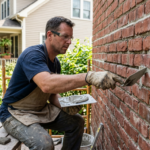
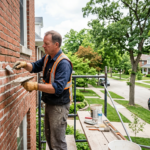
Tuckpointing is far more than an aesthetic touch-up. It is an engineering procedure that restores the structural load-bearing capacity of brick and stone walls. As detailed by regional specialists in Wisconsin chimney masonry maintenance, durable repairs demand careful mortar matching in strength, aggregate composition, and compressive flexibility.
Using mortar that is excessively hard (such as high-Portland Type M mixes on older historic bricks) causes the softer surrounding bricks to crack under thermal expansion. Professional masons formulate lime-rich Type N or Type O mortar mixes that accommodate natural building movement while shedding surface moisture.
| Masonry Component | Common Autumn Issue | Recommended Solution |
|---|---|---|
| Chimney Crown | Surface hairline cracking & pooling water | Elastomeric crown sealant or poured concrete replacement |
| Mortar Joints | Receding mortar, soft sand crumbling | Precision raking & Type N/O tuckpointing |
| Firebox Lining | Cracked firebrick & loose refractory cement | High-temperature refractory repointing or brick replacement |
| Exterior Brickwork | Spalling, efflorescence (white salt stains) | Damaged brick replacement & siloxane waterproofing |
Tailored Solutions for Every Property Type
Every home in Brookfield features distinct architectural specifications requiring customized masonry solutions:
- Historic & Mid-Century Homes: Require specialized low-compression mortar formulation to protect vintage, softer clay bricks from cracking under stress.
- Modern Custom Builds: Benefit from contemporary full-depth natural stone veneers, integrated gas log inserts, and seamless linear fireboxes built to current energy standards.
- High-Exposure Chimneys: Freestanding or roof-ridge chimneys facing heavy wind and weather exposure require heavy-duty cast concrete crowns and multi-stage breathable waterproofing.
- Outdoor Living Fireplaces: Patio and backyard hearths require complete autumn drainage checks, frost-proof mortar formulations, and protective protective cover management before snowfall.
Why Choose Precision Masonry Pro in Brookfield, WI
Maintaining a safe, structurally sound brookfield fireplace requires specialized regional expertise and master craftsmanship. Precision Masonry Pro delivers professional masonry services, custom fireplace installation, chimney rebuilding, and precision tuckpointing throughout Brookfield, WI and neighboring communities.
Our skilled craftsmen understand the demanding Wisconsin climate. We use weather-tested refractory mortars, precision joint tooling, and proven waterproofing systems designed to withstand years of freeze-thaw punishment while preserving the beauty of your home.
Frequently Asked Questions
How often should my fireplace and chimney be inspected?
The National Fire Protection Association (NFPA) recommends having your fireplace and chimney inspected at least once per year. An annual autumn inspection ensures that soot buildup, cracked tiles, or water leaks are resolved before heavy winter heating begins.
What causes white powdery stains on my exterior chimney brick?
This white residue is known as efflorescence. It occurs when moisture dissolves natural mineral salts inside the brick or mortar and carries them to the surface as the water evaporates. While the salt itself is harmless, persistent efflorescence is a clear warning sign of water intrusion that requires tuckpointing or sealing.
Can crumbling firebox mortar be repaired without rebuilding the whole fireplace?
Yes. If the firebox bricks remain structurally sound, a mason can grind out the deteriorated mortar joints and repoint them with high-temperature refractory mortar. If bricks are loose or cracked through, individual firebricks can be replaced without disturbing the entire hearth assembly.
Is waterproof sealing necessary for Wisconsin masonry?
Applying a breathable, 100% vapor-permeable siloxane or silane water repellent is one of the most cost-effective protective steps for Wisconsin homes. It prevents rain and melting snow from soaking into porous brickwork while still allowing internal moisture vapor to escape harmlessly.
Conclusion
Preparing your fireplace and chimney before winter arrives is the smartest investment you can make for home comfort, safety, and long-term property protection. Contact Precision Masonry Pro today to schedule your autumn inspection or custom fireplace consultation in Brookfield, WI, and enjoy a safe, cozy hearth all season long.